


How to Prepare for an HR Interview: A Practical Guide to Get Hired
Strong technical skills and academic knowledge are important, but they alone do not guarantee a job. Most hiring decisions are finalized during the HR interview round. This stage is designed to evaluate who you are beyond your resume.
HR interviews help employers understand your personality, communication style, attitude, strengths, weaknesses, and whether you are a good cultural fit for the organization. For many companies, especially MNCs, the HR round is an elimination stage. A weak performance here can cost you the offer, even if you performed well in technical rounds.
With the right preparation, clarity, and mindset, you can confidently clear this round. This guide will help you understand how to prepare effectively and avoid common mistakes.
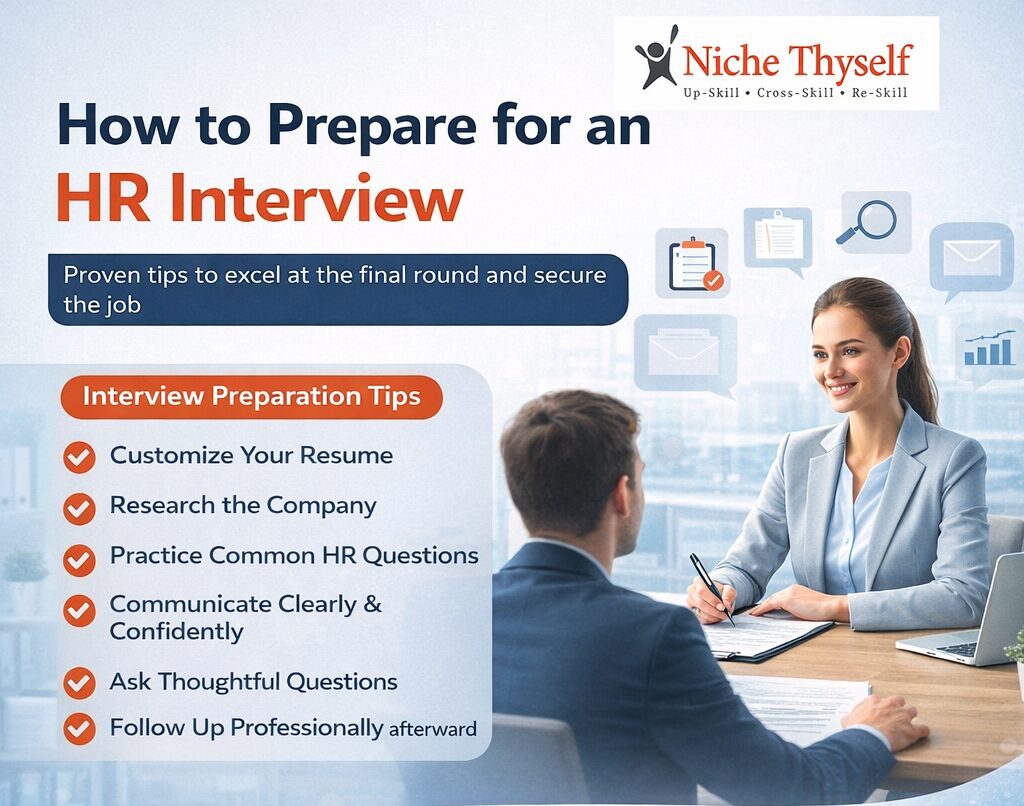
Why the HR Interview Matters
The HR round focuses on how you think, behave, and communicate. Employers use it to assess:
- Your professionalism and attitude
- Your ability to communicate clearly
- Your self-awareness and honesty
- Your long-term career intent
- Your alignment with company values
Unlike technical interviews, there are no right or wrong answers here. What matters is how clearly and confidently you present yourself.
Customize Your Resume for Every Role
Your resume is often the starting point of the HR discussion. Make sure it aligns with the job description.
- Highlight skills that match the role
- Be prepared to explain every project and experience listed
- Avoid exaggeration or false claims
If you mention a skill, certification, or achievement, be ready to justify it with examples.
Research the Company Thoroughly
Before attending the interview, spend time understanding the organization.
- Company background and mission
- Products or services they offer
- Work culture and values
- Recent achievements or news
- Presence on LinkedIn or social platforms
This preparation helps you answer questions confidently and shows genuine interest in the role.
Be Honest and Use Real Examples
HR professionals value honesty. Do not try to impress by making up stories.
- Share real experiences
- Use simple examples from academics, internships, or work
- Accept gaps or mistakes with confidence and clarity
If you faced challenges in your past role or career, explain what you learned from them.
Dress Simply and Professionally
You do not need expensive clothing, but you should look neat and professional.
- Choose simple, clean attire
- Avoid excessive accessories
- Dress according to company culture
Your appearance should reflect seriousness and respect for the opportunity.
Body Language and First Impressions Matter
Non-verbal communication plays a big role in HR interviews.
- Maintain good eye contact
- Sit confidently and avoid nervous gestures
- Smile naturally
- Listen attentively
Positive body language builds trust and makes you appear confident and approachable.
Be Punctual and Prepared
Arrive at least 10–15 minutes early. This gives you time to relax and focus.
- Carry extra copies of your resume
- Keep documents organized
- Stay calm and composed
Being punctual reflects discipline and professionalism.
Communicate Clearly and Thoughtfully
Communication skills are closely observed during HR interviews.
- Listen carefully before answering
- Speak clearly and concisely
- Avoid over-explaining
- Stay relevant to the question
Your ability to express thoughts clearly often matters more than the answer itself.
Avoid Salary Discussions in the First Round
Unless the interviewer brings it up, do not initiate salary or benefits discussions in the first HR interview. Focus on:
- Role responsibilities
- Learning opportunities
- Growth potential
Compensation discussions usually come later in the hiring process.
Be Honest About Your Career History
If you were laid off, resigned, or faced challenges in previous roles, be transparent.
- Explain the situation calmly
- Focus on learning and growth
- Avoid blaming employers
Honesty builds credibility and trust.
Ask Thoughtful Questions
At the end of the interview, you will often be asked if you have questions. Always ask at least one or two.
Examples:
- What does success look like in this role?
- How does the team measure performance?
- What learning opportunities are available?
This shows curiosity, confidence, and engagement.
Follow Up After the Interview
Sending a short thank-you email is a professional gesture.
- Thank the interviewer for their time
- Reiterate your interest in the role
- Keep it brief and polite
This small step can leave a lasting positive impression.
Final Thoughts
HR interviews are not about memorized answers. They are about clarity, honesty, confidence, and communication. With the right preparation and mindset, you can turn this round into your strongest advantage.
At NicheThyself, we focus on building not just technical expertise, but also interview readiness, communication skills, and career confidence. Our career-oriented training programs help learners prepare holistically for real-world hiring processes.