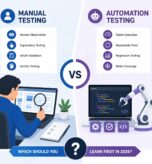



The debate around Online QA Training vs Self-Learning – Which Works Better? has become more popular as more students try to enter the software testing industry. Many beginners feel confused about whether they should join a professional QA training program or learn everything independently. Understanding Online QA Training vs Self-Learning – Which Works Better? can help you choose the right path based on your goals, budget, and learning style.
In today’s competitive IT market, both online training and self-learning can help you become a QA engineer. However, knowing the pros and cons of Online QA Training vs Self-Learning – Which Works Better? is essential before starting your journey.
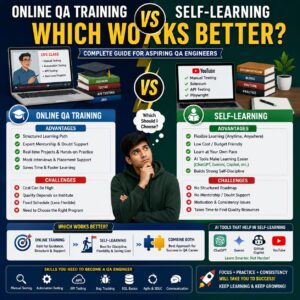
What Is Online QA Training?
Before comparing Online QA Training vs Self-Learning – Which Works Better?, let’s understand what online QA training means.
Online QA training refers to structured courses provided by institutes or mentors through:
- Live classes
- Recorded sessions
- Real-time projects
- Mock interviews
- Placement support
Students choosing professional programs often search for Online QA Training vs Self-Learning – Which Works Better? to understand if guided learning is worth the investment.
What Is Self-Learning in QA Testing?
Self-learning means learning software testing independently using:
- YouTube tutorials
- Free blogs
- Documentation
- ChatGPT and Gemini
- Practice projects
Many beginners exploring Online QA Training vs Self-Learning – Which Works Better? prefer self-learning because it is affordable and flexible.
Advantages of Online QA Training
One major point in Online QA Training vs Self-Learning – Which Works Better? is structured guidance.
1. Structured Learning Path
Online training programs provide:
- Step-by-step roadmap
- Organized curriculum
- Practical assignments
This makes understanding Online QA Training vs Self-Learning – Which Works Better? easier for beginners.
2. Mentorship & Support
In professional training:
- Mentors solve doubts
- Trainers provide feedback
- Students get career guidance
This is one reason many students prefer online training in Online QA Training vs Self-Learning – Which Works Better?.
3. Real-Time Projects
Most QA training programs include:
- Live projects
- Bug reporting practice
- Automation frameworks
Hands-on experience matters greatly in Online QA Training vs Self-Learning – Which Works Better?.
4. Interview Preparation
Online QA training often includes:
- Mock interviews
- Resume building
- QA interview questions
This gives students an advantage in Online QA Training vs Self-Learning – Which Works Better?.
Advantages of Self-Learning
Self-learning also has strong benefits in Online QA Training vs Self-Learning – Which Works Better?.
1. Flexible Learning
You can learn:
- Anytime
- Anywhere
- At your own speed
Flexibility is a major reason why people choose self-learning while researching Online QA Training vs Self-Learning – Which Works Better?.
2. Low Cost
Self-learning can be affordable because many resources are free:
- YouTube
- Blogs
- ChatGPT
- Open-source projects
Budget-conscious students often prefer this option in Online QA Training vs Self-Learning – Which Works Better?.
3. AI Tools Make Learning Easier
Modern AI tools are transforming self-learning:
- ChatGPT for test cases
- Gemini for explanations
- GitHub Copilot for automation scripts
AI support is changing the debate around Online QA Training vs Self-Learning – Which Works Better?.
Challenges of Online QA Training
While comparing Online QA Training vs Self-Learning – Which Works Better?, online training also has drawbacks:
- Expensive courses
- Low-quality institutes
- Dependency on trainers
- Limited flexibility
Choosing the wrong institute can affect your success.
Challenges of Self-Learning
Self-learning also has limitations in Online QA Training vs Self-Learning – Which Works Better?:
- No structured roadmap
- Lack of mentorship
- Motivation issues
- Difficulty in solving doubts
Without discipline, self-learning becomes difficult.
Which Works Better for Beginners?
The answer to Online QA Training vs Self-Learning – Which Works Better? depends on your learning style.
Online QA Training is Better If:
- You need guidance
- You struggle with consistency
- You want placement support
- You prefer structured learning
Self-Learning is Better If:
- You are disciplined
- You can learn independently
- You want low-cost learning
- You already understand basics
Many successful QA engineers combine both methods when deciding Online QA Training vs Self-Learning – Which Works Better?.
Best Approach: Combine Both
The smartest strategy in Online QA Training vs Self-Learning – Which Works Better? is combining both approaches.
Example:
- Join a structured course
- Practice independently
- Use ChatGPT and Gemini
- Build real-world projects
This hybrid approach provides the best results.
Final Thoughts
So, Online QA Training vs Self-Learning – Which Works Better? There is no single answer for everyone. Online training offers structure, mentorship, and placement support, while self-learning provides flexibility and affordability.
If you are serious about building a successful QA career, the best strategy is to combine guided learning with self-practice. Understanding Online QA Training vs Self-Learning – Which Works Better? will help you choose the right path and grow faster in software testing.