


Breaking into the software testing industry can be challenging, especially when you’re competing against candidates with experience. This is where understanding How to Build a QA Portfolio That Gets Interviews becomes crucial. A strong QA portfolio demonstrates your practical skills, showcases your testing knowledge, and helps recruiters see your potential even if you’re a fresher.
Many hiring managers review portfolios before scheduling interviews. That’s why learning How to Build a QA Portfolio That Gets Interviews can significantly improve your chances of landing your first QA job.
Why a QA Portfolio Matters
One of the biggest reasons candidates struggle is the lack of practical proof of their skills. Understanding How to Build a QA Portfolio That Gets Interviews allows you to showcase real testing work instead of simply listing skills on a resume.
A strong portfolio helps you:
- Demonstrate testing knowledge
- Show real project experience
- Stand out from other applicants
- Increase interview opportunities
- Build credibility as a QA professional
Learning How to Build a QA Portfolio That Gets Interviews can often make the difference between getting ignored and getting shortlisted.
What Recruiters Look for in a QA Portfolio
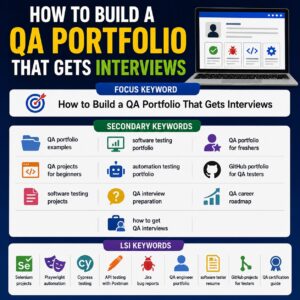
When evaluating How to Build a QA Portfolio That Gets Interviews, it’s important to understand what hiring managers expect.
Recruiters want to see:
- Test cases
- Bug reports
- Automation projects
- API testing work
- Documentation skills
- Problem-solving ability
Including these elements will strengthen your strategy for How to Build a QA Portfolio That Gets Interviews.
Step 1: Create Real Test Case Projects
The first step in How to Build a QA Portfolio That Gets Interviews is creating practical test case projects.
Choose websites or applications and create:
- Functional test cases
- Positive test scenarios
- Negative test scenarios
- Edge case testing
A portfolio filled with well-written test cases demonstrates that you understand software testing fundamentals.
Step 2: Add Professional Bug Reports
A key part of How to Build a QA Portfolio That Gets Interviews is showcasing bug reporting skills.
Your bug reports should include:
- Bug title
- Steps to reproduce
- Expected result
- Actual result
- Screenshots
- Severity and priority
Professional bug reports help employers evaluate your attention to detail.
Step 3: Showcase Automation Testing Projects
Automation skills can significantly strengthen How to Build a QA Portfolio That Gets Interviews.
Include projects using:
- Selenium
- Playwright
- Cypress
- TestNG
- JUnit
Upload your automation projects to GitHub and document them clearly.
Step 4: Include API Testing Examples
API testing is one of the most in-demand QA skills today.
When learning How to Build a QA Portfolio That Gets Interviews, include:
- Postman collections
- API test cases
- JSON validation examples
- API documentation
API projects demonstrate advanced testing capabilities.
Step 5: Create a GitHub Repository
GitHub is essential for How to Build a QA Portfolio That Gets Interviews.
Your repository should contain:
- Test cases
- Automation scripts
- API testing projects
- Documentation
- README files
A well-organized GitHub profile immediately improves your professional image.
Step 6: Build a Personal QA Portfolio Website
A portfolio website helps showcase everything in one place.
For How to Build a QA Portfolio That Gets Interviews, your website can include:
- About Me section
- Skills
- Projects
- Certifications
- GitHub links
- Contact information
A professional website makes it easier for recruiters to evaluate your work.
Step 7: Add Certifications
Certifications strengthen How to Build a QA Portfolio That Gets Interviews because they validate your knowledge.
Popular certifications include:
- ISTQB Foundation Level
- Selenium Certifications
- API Testing Courses
- Agile Testing Certifications
Although certifications alone won’t get you hired, they add credibility.
Step 8: Document Your Learning Journey
An often-overlooked aspect of How to Build a QA Portfolio That Gets Interviews is documenting your growth.
You can publish:
- QA learning notes
- Testing tutorials
- Case studies
- Project walkthroughs
This demonstrates passion and continuous learning.
Common Mistakes to Avoid
While working on How to Build a QA Portfolio That Gets Interviews, avoid these mistakes:
- Uploading incomplete projects
- Copying projects from others
- Poor documentation
- No GitHub activity
- No automation examples
- Missing bug reports
Avoiding these mistakes can dramatically improve your portfolio quality.
Best Tools for QA Portfolio Projects
To strengthen How to Build a QA Portfolio That Gets Interviews, learn and showcase these tools:
- Selenium WebDriver
- Playwright
- Cypress
- Postman
- Jira
- GitHub
- Jenkins
Recruiters often search for these skills during hiring.
How AI Tools Can Improve Your Portfolio
Modern AI tools can help improve How to Build a QA Portfolio That Gets Interviews.
Useful tools include:
- ChatGPT for test case generation
- Gemini for learning concepts
- GitHub Copilot for automation scripts
These tools can help you create better projects and documentation faster.
Final Thoughts
Learning How to Build a QA Portfolio That Gets Interviews is one of the smartest investments for aspiring QA professionals. A strong portfolio showcases your skills, demonstrates practical experience, and helps recruiters trust your abilities even if you have no professional experience.
Focus on creating real projects, writing test cases, documenting bugs, building automation frameworks, and maintaining an active GitHub profile. If done correctly, How to Build a QA Portfolio That Gets Interviews can become your most powerful tool for landing software testing interviews.